An engineering-driven examination of the three core technology platforms that power Gravotech permanent identification systems: fiber laser, CNC mechanical, and CO2 laser. Each technology addresses distinct material-process combinations with measurable tradeoffs in speed, depth, contrast, and operating cost.
Gravotech develops and manufactures laser sources, motion systems, and control software in-house. This vertical integration gives our engineering team direct control over the marking process chain, from beam generation to final verification.
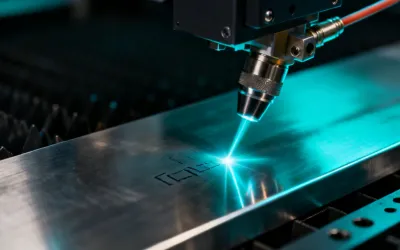
Ytterbium-doped fiber laser sources generate a 1064nm beam ideally absorbed by metals and most engineered plastics. The non-contact process produces permanent marks without material removal in standard annealing mode, or with controlled ablation for deep engraving applications.
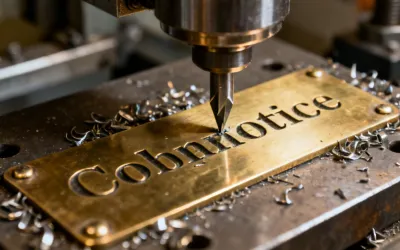
Servo-driven X/Y/Z motion platforms paired with high-speed spindles (rotary engraving) or spring-loaded diamond styli (drag engraving). This technology excels at creating tactile, deep marks on metals, laminates, and plastics with physical depth that remains readable even after surface wear.
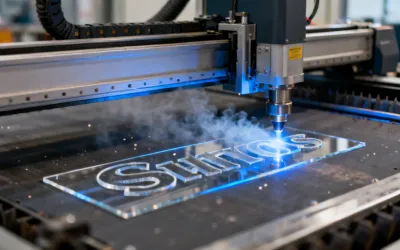
Sealed CO2 laser tubes operating at 10.6 micron wavelength interact efficiently with organic and non-metallic materials. Large-format gantry platforms provide work areas up to 1200 x 900mm for signage, industrial marking, and material processing applications requiring both engraving and through-cutting.
Selecting the correct marking technology depends on four primary variables: substrate material, required mark type, production volume, and regulatory standard. This matrix summarizes the tradeoffs our application engineers evaluate during system specification.
| Parameter | Fiber Laser | CNC Mechanical | CO2 Laser |
|---|---|---|---|
| Primary Materials | Stainless steel, aluminum, titanium, brass, plastics | Brass, aluminum, acrylic, laminates, wood | Acrylic, wood, leather, fabric, glass, ceramics |
| Mark Type | Surface annealing, color change, ablation, deep engraving | Physical depth engraving, diamond-drag scribing | Surface engraving, through-cutting, raster marking |
| Typical Character Height | 0.1mm to 200mm | 1mm to 150mm | 0.5mm to 500mm |
| Production Speed | Highest (non-contact, galvo-steered) | Moderate (physical tool contact) | High for organics, moderate for engraving depth |
| Consumables | None (diode-pumped solid state) | Cutting tools, diamond styli | Laser tube replacement (sealed CO2) |
| Regulatory Fit | UDI, MIL-STD-130, AIAG B-17 | MIL-STD-130, industrial nameplates | General marking, signage standards |
This table represents general guidance. Material-specific results depend on alloy composition, surface treatment, and marking parameters. Contact our application engineers for a process evaluation using your actual substrates.
Understanding the physics behind each marking process enables informed technology selection and parameter optimization.
When a focused laser beam strikes a material surface, energy transfer occurs through three mechanisms: absorption, reflection, and transmission. The ratio between these mechanisms depends on the laser wavelength and material properties.
Fiber lasers at 1064nm are efficiently absorbed by metals because this wavelength interacts with free electrons in the metallic crystal lattice. At controlled power densities below the ablation threshold (typically 10^6 W/cm2 for stainless steel), the beam creates a thermally-induced oxide layer that appears as a high-contrast color change without removing material. This "annealing" mark preserves the surface integrity essential for medical instruments and aerospace components that must maintain fatigue life.
Above the ablation threshold, material vaporizes in a controlled manner, creating physical depth marks from 10 to 200+ microns. Our application engineers balance speed, depth, and surface quality by adjusting pulse frequency (20-200 kHz), pulse duration, and hatching parameters for each specific material.
CNC engraving removes material through controlled chip formation. A rotating carbide or diamond-tipped tool follows programmed tool paths while servo motors maintain depth regulation to 0.01mm. The result is a tactile mark with physical depth that remains readable even when surfaces are painted, worn, or contaminated.
Diamond-drag scribing uses a different mechanism: a spring-loaded diamond stylus displaces material laterally without chip formation, creating a fine burnished line. This process is ideal for metal surfaces requiring non-destructive marking, such as calibration instruments and precision measurement tools.
The key advantage of mechanical engraving over laser marking is depth. While laser marks typically penetrate 10-200 microns, mechanical engraving can produce depths exceeding 500 microns — critical for applications where marks must survive aggressive surface treatments, sandblasting, or heavy industrial wear. The tradeoff is speed: mechanical processes are inherently slower due to physical tool-material contact.
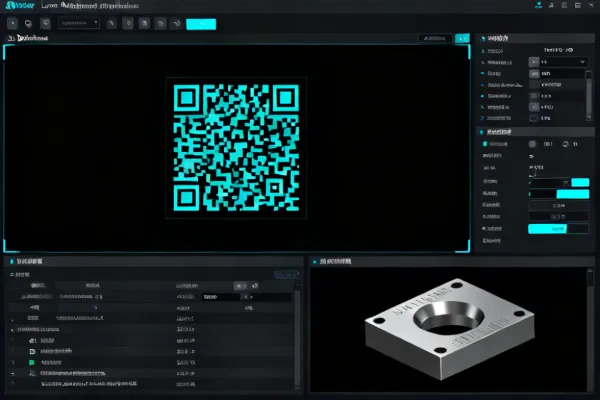
Gravotech marking systems operate through Gravostyle, our proprietary marking and engraving software developed in parallel with our hardware platforms. This vertical integration eliminates the compatibility gaps common when using third-party marking software with OEM laser or CNC hardware.
Every marking technology involves tradeoffs. Understanding these limitations upfront leads to better system selection and realistic production expectations.
Send us your material samples and marking requirements. Our application laboratory will conduct a complimentary process evaluation and return marked samples with recommended parameters and cycle time estimates.
Request a Technology Assessment